Don’t fertilize or use chemicals near the shoreline
Shoreline residents are asked to NOT use any fertilizers, pesticides, weed killers, between their home and the water. If you chose to fertilize in this zone close to the water, please use organic fertilizer with no phosphorus or nitrogen. Not using phosphorus should be easy because Washington State banned the sale of fertilizer with phosphorus to homeowners years ago (although it is still used on golf courses and some other locations commercially). Use of other chemicals can also upset the water quality in our lake.
Avoid Nitrogen
Nitrogen is a big problem. Please avoid using fertilizers with nitrogen near the shoreline. Excess nitrogen is harmful to lakes because it acts as a nutrient pollutant, fueling rapid algae and plant growth (eutrophication) that causes harmful algal blooms (HABs), depletion of dissolved oxygen, and fish kills. It reduces water clarity, decreases biodiversity, and can release toxins harmful to humans and aquatic life
Key Reasons Nitrogen Harms Lake Waters
• Harmful Algal Blooms (HABs): Excess nitrogen, especially when combined with phosphorus, triggers massive algae blooms, including toxic blue-green algae (cyanobacteria). These blooms can release
neurotoxins that harm wildlife and people.
• Oxygen Depletion (Hypoxia): When the excessive algae blooms die and decompose, bacteria consume large amounts of dissolved oxygen in the water. This creates “dead zones” where fish and other aquatic organisms cannot survive.
• Reduced Water Clarity and Light: Dense algae blooms and excessive aquatic plant growth block sunlight from reaching deeper into the lake, killing beneficial submerged vegetation.
• Toxic and Inedible Plants: Nitrogen encourages the growth of nuisance aquatic plants that out-compete native, beneficial species, altering the ecosystem balance.
• Drinking Water Contamination: High nitrogen levels, specifically in the form of nitrates, can contaminate water sources, posing health risks, particularly for infants.
Source: US Geological Survey (USGS LINK)
Useful Tips for Keeping our Lake Clean
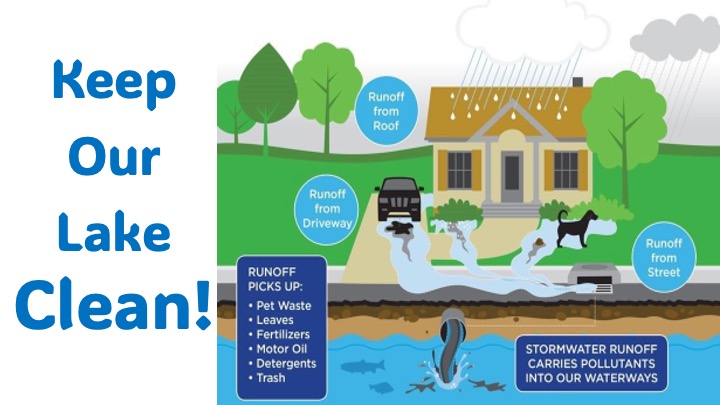
- Avoid blowing leaves and grass clippings into the lake!
- These can cause low dissolved oxygen and nutrient overloading leading to algae blooms.
- Rake leaves away from the lake for pickup, mulch them into your lawn with a power mower, or compost them in your yard!