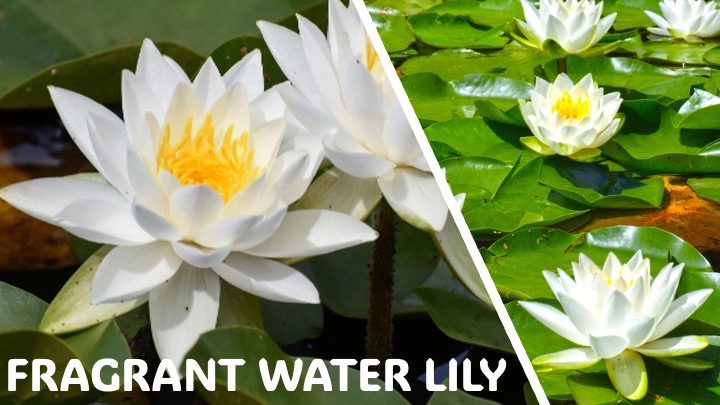
The fragrant water lily, scientifically known as Nymphaea odorata, is classified as a Class C noxious weed in Thurston County, Washington. While Thurston County property owners aren’t mandated to control it, the county encourages landowners to manage its spread due to its invasive nature and potential to negatively impact aquatic ecosystems.
Why Is It a Noxious Weed?
Unmanaged fragrant water lily can form dense stands in water that can cover hundreds of acres and can persist until senescence in the fall. It can restrict lake-front access, eliminate swimming opportunities, and outcompete native aquatic vegetation. (Washington State Noxious Weed Control Board LINK)
Coming in August – Herbicide Treatment
In early August, our herbicide contractor, Aquatechnex, will treat areas A-1 and A-2 (see TREATMENT MAP) with ClearCast (Imazmox) to help control fragrant water lily. These areas were chosen because associated properties/docks were the most impacted by this noxious weed, losing lake access. The herbicide is sprayed on the above water foliage and travels down to the tubers (rhizomes) in the sediment and kills them. The sprayed plants will not return next year.
ClearCast (Imazmox) when used as directed, is designed to be effective against aquatic weeds while minimizing harm to the surrounding water and its inhabitants. It is formulated to be practically non-toxic to birds, fish, algae, and aquatic invertebrates, and it has minimal restrictions on irrigation. This herbicide works by targeting the weeds, including their root systems, and breaking them down over time.
The lily pads in Area C are scheduled to be treated in August 2026.
Treating small, targeted areas reduces the possibility of floating mats from the weed die-off. This small amount of die-off should not be any greater than the normal fall vegetation die-off.
This treatment is part of our approved Aquatic Vegetation Management Plan (IAVMP).
From: Supplemental Environmental Impact Statement for State of Washington Aquatic Plant and Algae Management (August 14, 2017), page 146 LINK
“As long as in-water treatments of ClearCast (Imazmox) are administered in accordance with label specifications, no impacts to swimming or other recreational aquatic activities are expected, and therefore swimming and other recreational activities should be able to continue unimpeded….”
… “The potential for toxicity to various life stages of fish and aquatic life is minimal due to the low ecotoxicity of imazamox and derivatives, and therefore fish are not an issue for imazamox nor a reason provided in Ecology’s permit to implement WDFW timing windows.”